How to Choose a Customs Broker in Canada: A Complete Guide
Last updated: May 20, 2026
Quick Answer: A licensed customs broker in Canada acts as your authorized representative with the Canada Border Services Agency (CBSA), handling tariff classification, duty calculations, and import documentation on your behalf. To choose the right one, match the broker’s industry specialization and port coverage to your specific goods and shipping routes, verify their CSCB membership and CARM compliance capability, and compare service fees against the risk exposure of getting clearance wrong.
Key Takeaways
- Every customs broker operating in Canada must be licensed by the CBSA. Always verify a broker’s license before signing anything.
- Using a broker does not transfer your legal liability. As the importer of record, you remain responsible for correct HS classification, valuation, and origin declarations [10].
- CBSA’s 2026 trade compliance verification priorities include surtaxes on goods from China and the U.S., origin verification, and supply-managed goods — your broker should be current on all of these [9].
- CARM (CBSA Assessment and Revenue Management) is now an ongoing operational reality, not a one-time event. A quality broker will manage your portal delegation and release-prior-to-payment setup proactively.
- Broker fees vary widely. Understand exactly what is included in the base clearance fee versus what triggers add-on charges.
- Specialization matters. A broker experienced in food imports, e-commerce, or industrial goods will outperform a generalist when compliance gets complicated.
- Small and mid-sized importers often underestimate customs complexity until their first shipment is held at the border. Getting a broker early is almost always cheaper than fixing problems after the fact.
- The LogisticsSearch.ca customs broker directory is a practical starting point for finding vetted Canadian brokers by region and specialty.
What Does a Customs Broker in Canada Actually Do?
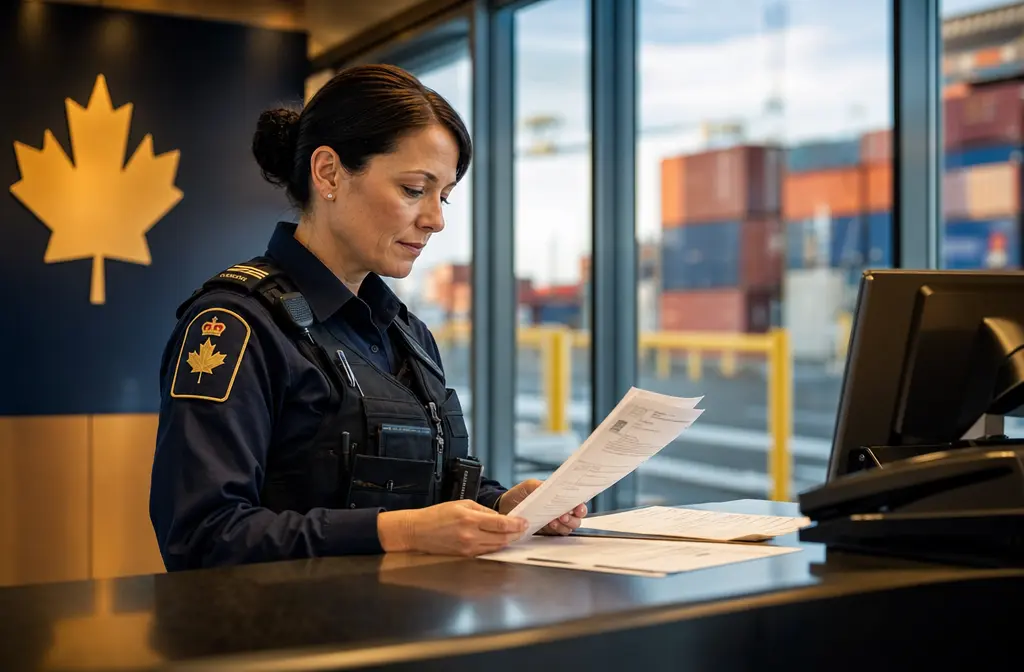
A licensed customs broker in Canada prepares and submits import declarations to the CBSA on your behalf, calculates applicable duties and taxes, and ensures your shipment clears the border without unnecessary delays or penalties.
Here is a breakdown of the core tasks a broker handles:
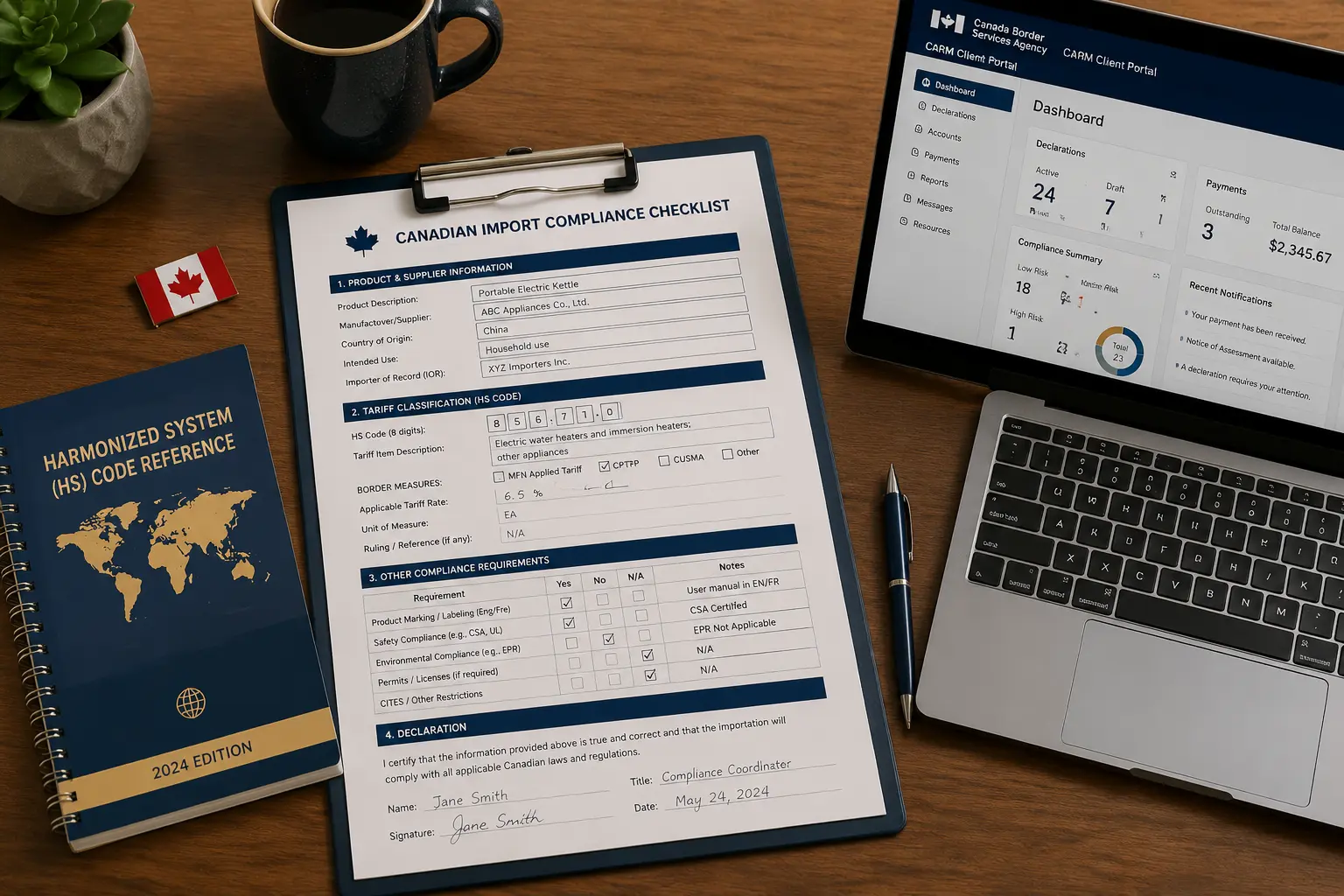
- Tariff classification: Assigning the correct Harmonized System (HS) code to your goods, which determines the duty rate that applies.
- Valuation: Declaring the correct customs value of your shipment, including adjustments for freight, insurance, and related-party transactions.
- Origin determination: Confirming where goods were manufactured, which affects whether preferential tariff rates under trade agreements like CUSMA (Canada-U.S.-Mexico Agreement) apply.
- Documentation review: Checking commercial invoices, packing lists, bills of lading, and permits before submission.
- Duty and tax payment: Remitting GST, HST, and any applicable duties to the CBSA on your behalf.
- OGD compliance: Coordinating with Other Government Departments (Health Canada, CFIA, Transport Canada) when your goods require additional permits or inspections.
- CARM portal management: Setting up your importer account, managing delegation of authority, and handling release-prior-to-payment workflows.
One thing brokers cannot do: absorb your legal risk. Jet Worldwide and multiple industry advisories are clear that the importer of record remains legally responsible for the accuracy of every declaration, even when a broker files it [10]. This is not a reason to avoid brokers — it is a reason to choose a careful, well-documented one.
Why Small Business Importers and E-Commerce Sellers Need a Customs Broker in Canada
For a first-time importer or an e-commerce entrepreneur sourcing products from China, the U.S., or Europe, customs clearance can feel like a black box. The honest answer is: it often is, unless you have the right help.
The practical risks of going it alone:
- Misclassified HS codes lead to wrong duty rates, which can trigger reassessments and penalties months after your shipment clears.
- Undervalued goods — a common mistake among new importers who use the factory price rather than the transaction value — attract CBSA scrutiny.
- Missing OGD requirements (for example, Health Canada labeling rules for supplements or CFIA requirements for food products) can result in shipments being refused at the border entirely.
- CBSA’s 2026 compliance verification priorities specifically target surtax orders covering goods from China and the U.S., steel, aluminum, and motor vehicles [9]. If your products fall anywhere near these categories, the margin for error is slim.
Who benefits most from a customs broker:
| Importer Type | Why a Broker Helps |
|---|---|
| E-commerce seller sourcing from China | Surtax exposure, origin verification, high shipment frequency |
| Food or agri-food importer | Supply-managed goods, CFIA permits, quota management |
| Small manufacturer importing components | Tariff classification complexity, duties relief programs |
| Pet product importer | Specialized categories now under CBSA verification [9] |
| First-time importer (any category) | Avoiding costly early mistakes that set bad precedents |
For anyone running a home-based business or side hustle that has grown to the point of importing goods regularly, the cost of a broker is almost always justified by the risk reduction alone. Think of it less as an expense and more as a compliance insurance policy.
How to Verify a Customs Broker’s Credentials in Canada
Before you hand over power of attorney to any broker, verify three things: their CBSA license, their CSCB membership, and their CARM readiness.
Step 1: Confirm their CBSA license
All customs brokers in Canada must hold a valid CBSA broker’s license. You can ask the broker directly for their license number and verify it with the CBSA. Do not work with any firm that cannot produce this on request.
Step 2: Check CSCB membership
The Canadian Society of Customs Brokers (CSCB) is the national professional association for the industry. Membership is voluntary but signals a commitment to ongoing education and regulatory awareness. The CSCB’s trade news portal tracks regulatory changes, notices, and implementation details — brokers who engage with this material stay current [1].
Step 3: Ask about CARM capability
CARM is now a core operational requirement for every Canadian importer. A broker who cannot clearly explain how they manage importer delegation, surety bond setup, and release-prior-to-payment workflows is behind the curve. This is not a minor technical detail — it directly affects whether your goods move smoothly or sit at the port.
Quick checklist before signing:
- [ ] Valid CBSA broker license confirmed
- [ ] CSCB member (preferred)
- [ ] Can demonstrate active CARM portal management for existing clients
- [ ] Carries errors and omissions (E&O) insurance
- [ ] Has experience with your specific product category
- [ ] Can cover the ports of entry your shipments use

What to Look for When Comparing Customs Brokers in Canada
Not all brokers are equal, and the cheapest option is rarely the best one for a growing import business. Here is how to evaluate them side by side.
Specialization and Industry Experience
Customs is not one-size-fits-all. A broker who handles automotive parts all day may not be the right fit for a food importer dealing with supply-managed goods or a pet product company whose category now sits on CBSA’s active verification list [9].
Choose a specialist if your goods fall into:
- Food, agri-food, or beverages (especially anything with dairy content)
- Pet products or animal-derived ingredients
- Textiles and apparel (complex origin rules under CUSMA)
- Electronics or technology hardware (anti-dumping exposure)
- Steel, aluminum, or motor vehicles (active surtax orders)
A generalist broker may be fine if:
- Your goods are straightforward consumer products with clear HS codes
- You import from a single country with a well-established trade agreement
- Your shipment volume is low and your goods are low-risk
Port Coverage and Availability
Does the broker have staff or agents at the ports you actually use? A broker licensed in Toronto may not have the same operational depth at Vancouver or Windsor. Ask specifically which ports they cover and whether they have 24/7 availability for time-sensitive clearances.
Technology and Communication
A good broker in 2026 should offer:
- A client portal where you can track shipment status
- Electronic document submission and storage
- Proactive alerts when CBSA flags a shipment for examination
- Clear communication timelines (how quickly do they respond to queries?)
Fee Structure Transparency
Broker fees in Canada typically include a base clearance fee plus add-ons for things like examination handling, OGD coordination, or rush processing. Always ask for a full fee schedule in writing before you commit. Hidden fees are one of the most common complaints importers have after the fact.
Understanding Customs Broker Fees in Canada
Customs broker fees are not regulated by the government, so pricing varies significantly across the market. Here is what to expect.
Typical fee components:
- Entry preparation fee: The base fee for preparing and filing your customs declaration. This can range from roughly $50 to $200+ per shipment depending on complexity and broker.
- Disbursement fee: A small percentage charged on duties and taxes paid on your behalf (covers the broker’s cash flow cost).
- Examination fee: If CBSA selects your shipment for physical or document examination, brokers often charge an additional handling fee.
- OGD coordination fee: If your goods require coordination with Health Canada, CFIA, or another department, expect an add-on.
- Storage and demurrage: If your goods are delayed at the port, storage costs can accumulate quickly — ask who is responsible for managing this.
💡 Practical tip: Ask every broker you evaluate for a sample invoice from a comparable shipment. This is the fastest way to understand what you will actually pay, not just what the base fee says.
It is also worth noting that CBSA has adjusted certain fees for inflation in 2026 [4], so any broker quoting rates from 2024 schedules may be working from outdated figures. Confirm that their fee structures reflect current CBSA service charges.
CARM and Why It Changes How You Should Choose a Customs Broker in Canada
CARM (CBSA Assessment and Revenue Management) has fundamentally changed the relationship between importers and their brokers. Understanding this is now essential for anyone choosing a broker in 2026.
What CARM means for importers:
- Every importer must have their own CARM portal account, even if a broker files on their behalf.
- Importers must formally delegate authority to their broker through the portal.
- Financial security (surety bond or cash deposit) must be in place for release-prior-to-payment privileges.
- Duty and tax statements are now issued directly to importers through the portal, not just to brokers.
What this means for broker selection:
A broker who helped you set up your CARM account, walked you through the delegation process, and has a clear workflow for managing your monthly statements is providing genuine value. A broker who says “don’t worry about CARM, we handle everything” without explaining how is a red flag — because you, as the importer, are legally required to have an active account and understand your obligations.
Multiple industry advisories in 2026 treat CARM onboarding and surety bond setup as core competence signals when evaluating broker quality. Ask any broker you are considering: “Walk me through how you manage CARM delegation for a new client.” Their answer will tell you a lot.

Key Questions to Ask a Customs Broker Before You Hire Them
Treat the broker selection process like hiring a key contractor for your business. Here are the questions that separate capable brokers from mediocre ones.
On credentials and compliance:
- Can you provide your CBSA broker license number?
- Are you a CSCB member?
- Do you carry errors and omissions insurance?
On CARM and technology:
- How do you manage CARM portal delegation for new clients?
- Do you have a client portal for shipment tracking?
- How do you communicate when CBSA flags a shipment for examination?
On specialization:
- What percentage of your clients import goods in my product category?
- Are you current on CBSA’s 2026 trade compliance verification priorities, including surtax orders and origin verification requirements?
- Do you have experience handling OGD requirements for my type of goods?
On fees and service:
- Can you provide a written fee schedule and a sample invoice?
- What is your average clearance time for shipments at [your port of entry]?
- Who is my primary contact, and what is your response time commitment?
A common mistake: Choosing a broker based on price alone without asking about specialization. A broker who charges $30 less per entry but misclassifies your goods twice a year will cost you far more in reassessments, penalties, and delayed shipments.
How CBSA’s 2026 Compliance Priorities Affect Your Broker Choice
CBSA’s 2026 trade compliance verification priorities are not just regulatory housekeeping — they directly affect which brokers are worth hiring for specific import categories.
What CBSA is actively verifying in 2026 [9]:
- Supply-managed goods: Dairy, poultry, and eggs with quota and over-quota duty implications.
- Frozen desserts with dairy content (5%+): A specific sub-category now under active scrutiny.
- Cheese treats for dogs and spent fowl: Niche agri-food categories flagged for verification.
- Electricity imports (Chapter 27): Energy importers face origin and classification scrutiny.
- Surtax orders: Covering goods from China, the U.S., steel, aluminum, and motor vehicles.
- GST/excise compliance: Accurate tax calculation across product categories.
- Origin verifications: Proving where goods were actually manufactured, not just where they shipped from.
What this means practically:
If your business imports any of these categories, your broker needs more than general customs knowledge. They need active workflows for quota management, surtax determination, and documented origin verification. Willson International’s commentary on these priorities notes they are risk-based and subject to change during the year [9], which means your broker should be monitoring CBSA notices actively, not just reviewing an annual list.
The CBSA’s tariff schedule is updated at least once a year (and more often when amendments are needed), so a broker who references last year’s tariff file without checking for current notices is working with incomplete information.
How to Find a Reputable Customs Broker in Canada
Finding a qualified customs broker does not have to mean cold-calling firms from a random Google search. There are structured ways to identify vetted options.
Option 1: Use a curated broker directory
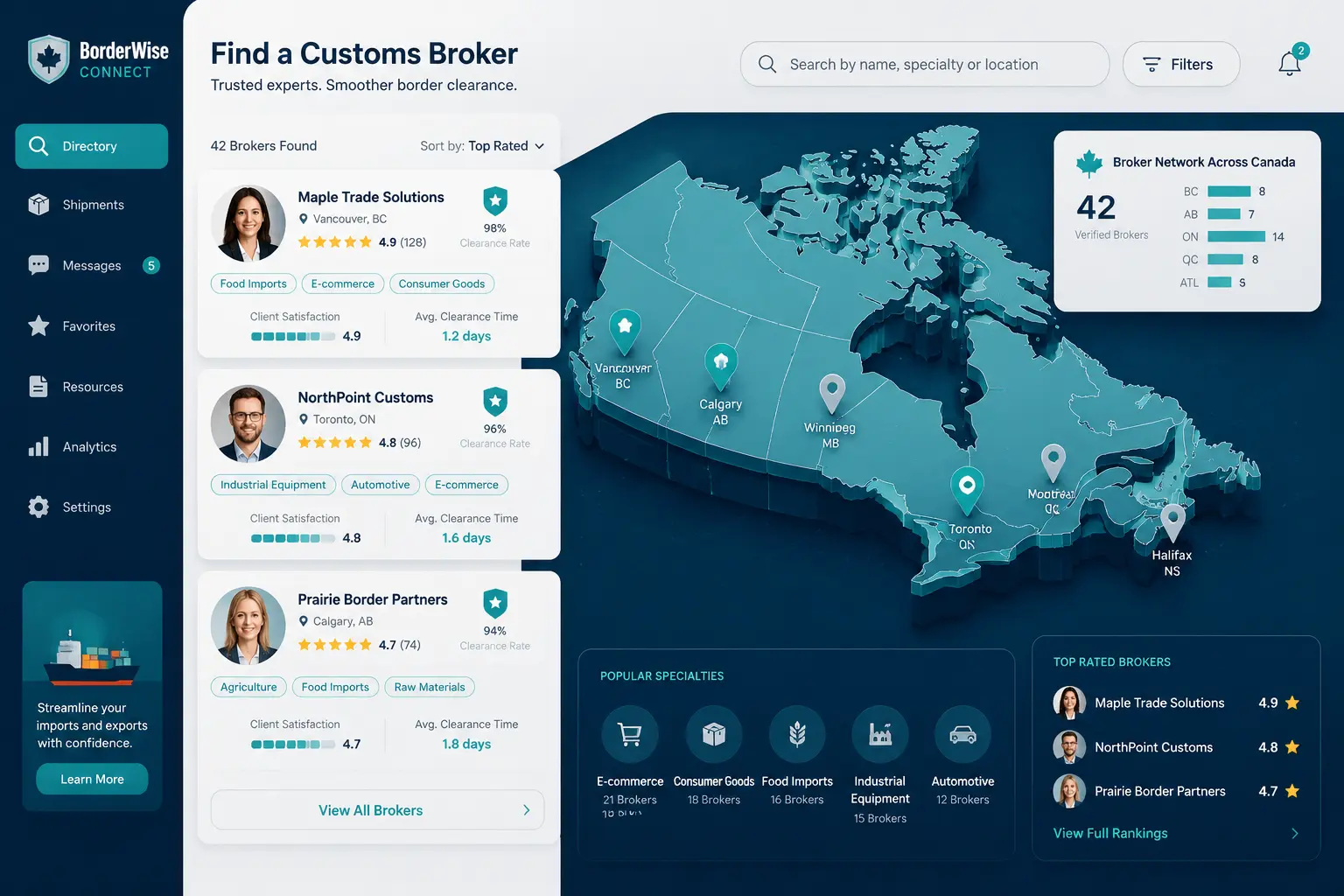
The LogisticsSearch.ca customs broker directory is a practical starting point. It organizes Canadian customs brokers by region and specialty, which saves significant time when you need a broker with specific port coverage or industry experience. For small business owners and e-commerce entrepreneurs who are new to importing, a directory like this reduces the guesswork considerably.
Option 2: Ask your freight forwarder
If you already work with a freight forwarder, they often have established relationships with licensed brokers and can make a warm introduction. Just confirm that the referral is based on quality, not just a preferred-vendor arrangement.
Option 3: Check the CSCB directory
The Canadian Society of Customs Brokers maintains a member directory. CSCB members have committed to professional development and regulatory awareness, which is a useful baseline filter [1].
Option 4: Industry associations
If you are importing within a specific sector (food, automotive, textiles), your industry association may maintain a list of recommended brokers with relevant experience.
What to avoid:
- Brokers who cannot clearly explain their fee structure upfront
- Firms that promise “guaranteed clearance” without caveats (no broker can guarantee CBSA examination outcomes)
- Any broker who discourages you from setting up your own CARM account
FAQ: Customs Broker Canada
Q: Do I legally need a customs broker to import goods into Canada?
No. Importers can self-clear goods through the CBSA. However, for businesses importing regularly or in complex categories, the compliance risk of self-clearing almost always outweighs the cost of hiring a broker.
Q: How much does a customs broker in Canada typically charge?
Base clearance fees generally range from $50 to $200+ per shipment, depending on complexity and broker. Add-ons for OGD coordination, examinations, or disbursements can increase the total. Always request a full written fee schedule.
Q: Can a customs broker guarantee my goods won’t be examined by CBSA?
No. CBSA selects shipments for examination based on risk algorithms and compliance history. A broker can reduce the likelihood of flags through accurate documentation, but cannot guarantee examination-free clearance.
Q: Am I still legally responsible if my broker makes a mistake?
Yes. As the importer of record, you remain legally responsible for the accuracy of all declarations, even those filed by your broker [10]. This is why choosing a careful, well-documented broker matters.
Q: What is CARM and why does it matter when choosing a broker?
CARM is CBSA’s digital platform for managing import accounts, duty payments, and financial security. Every importer needs their own CARM account, and a good broker will help you set it up and manage delegation properly. It is now a core competence signal for broker quality.
Q: How do I know if a broker is current on 2026 CBSA compliance priorities?
Ask them directly. A knowledgeable broker should be able to explain the current verification priorities — including surtax orders, origin verification requirements, and supply-managed goods — without hesitation [9].
Q: What is an HS code and why does it matter?
An HS code (Harmonized System code) is the international classification number assigned to every type of imported good. It determines the duty rate, applicable trade agreement treatment, and whether OGD requirements apply. Misclassification is one of the most common and costly customs errors.
Q: Can one customs broker handle all my ports of entry?
Some large brokers have national coverage; smaller firms may be concentrated at specific ports. Always confirm which ports of entry a broker actively covers before signing an agreement.
Q: Is a cheaper customs broker always a worse choice?
Not necessarily, but price should never be the primary filter. A lower fee means nothing if the broker misclassifies your goods or misses a surtax order. Evaluate specialization, credentials, and CARM capability first.
Q: How long does customs clearance take in Canada?
For routine shipments with complete documentation, clearance can happen within hours. Shipments flagged for examination or missing documentation can take days. A good broker reduces delays by submitting complete, accurate documentation from the start.
Q: What is the difference between a customs broker and a freight forwarder?
A freight forwarder arranges the physical transportation of goods. A customs broker handles the regulatory clearance with CBSA. Some firms offer both services, but they are distinct functions with different licensing requirements.
Q: Where can I find a customs broker in Canada for my specific industry?
The LogisticsSearch.ca customs broker directory is a good starting point, organized by region and specialty. The CSCB member directory is another vetted resource [1].
Conclusion: Making a Smart, Informed Choice
Choosing the right customs broker in Canada is one of the most practical decisions a growing import business can make. It is not glamorous, but it is the kind of foundational choice that protects your shipments, your margins, and your compliance record for years to come.
Here is what to take away:
- Verify credentials first. CBSA license, CSCB membership, and CARM capability are non-negotiable starting points.
- Match specialization to your goods. Especially if your products fall into any of CBSA’s 2026 active verification categories.
- Understand the fee structure in writing. Base fees are just the beginning — know what triggers add-ons.
- Ask the hard questions. A broker who cannot clearly explain CARM delegation or current surtax orders is not ready for your business.
- Remember your legal responsibility. A broker files on your behalf; you own the compliance outcome.
For small business owners, e-commerce entrepreneurs, and anyone building a home-based business that has grown into regular importing, the right customs broker is not just a service provider — it is a genuine business partner in your supply chain.
Ready to find a qualified customs broker in Canada? Start with the LogisticsSearch.ca customs broker directory to browse vetted brokers by region and specialty. It is a straightforward, no-pressure way to compare your options and move forward with confidence.
References
[1] Trade News — https://cscb.ca/en/trade-news
[4] 2026 Canada Border Services Agency Adjusts Certain Fees For Inflation And GST/HST — https://globaltaxnews.ey.com/news/2026-0559-canada-border-services-agency-adjusts-certain-fees-for-inflation-and-gst-hst
[9] CBSA 2026 Trade Compliance Priorities — https://www.rrcustoms.ca/post/cbsa-2026-trade-compliance-priorities
[10] Customs Brokerage Market 2026 Navigating Growth — https://www.linkedin.com/pulse/customs-brokerage-market-2026-navigating-growth-0gr6f